Container FAQs Dimensions Types More
Your complete shipping container FAQ guide. Find answers on dimensions, types, purchasing, and delivery logistics.

Your complete shipping container FAQ guide. Find answers on dimensions, types, purchasing, and delivery logistics.
Find technical answers to common queries regarding container dimensions, specialist types, and site preparation from the regional experts at Shipping Containers of Southampton.
We maintain a professional stock of standard ISO containers, primarily in 10ft, 20ft, and 40ft lengths. We also supply high-cube variants (9ft 6in tall) and specialist units such as refrigerated reefers, open-top, and flat rack containers.
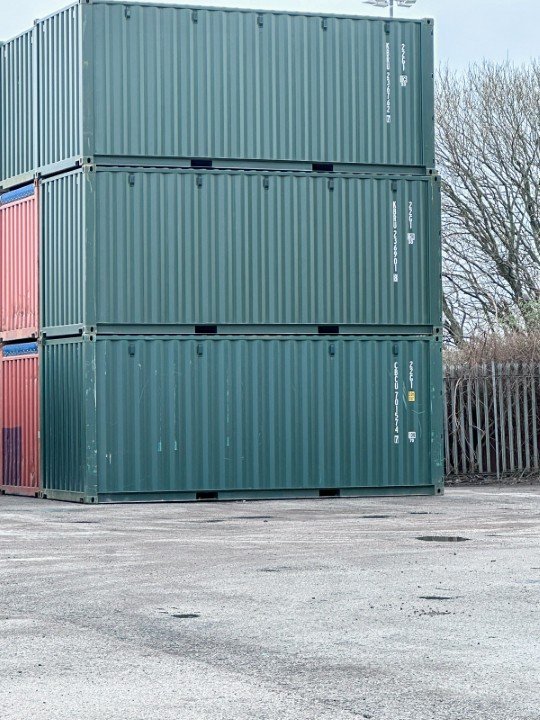
A ‘one-trip’ container is effectively a new unit. It is manufactured abroad and makes a single cargo journey to the UK to offset initial transport costs. These units arrive in nearly pristine condition, are constructed from Corten steel, and are the ideal choice for high-visibility storage or modular conversions.
Under the current 2026 guidelines, containers are typically viewed as temporary structures. However, local authorities like Southampton City Council generally enforce a 28-day rule for temporary placement. If the unit remains longer, or is located in a Conservation Area, you may need formal approval. We recommend reviewing our local planning permission guide for specifics.
Condensation occurs when the steel walls cool faster than the internal air. We recommend using anti-condensation coatings like GrafoTherm or choosing an insulated/ply-lined unit to eliminate the cold bridge. Maintaining clear airflow beneath the unit is also essential. For more tips, check our guide on keeping your container dry.
Every unit in our sales and hire stock is constructed from heavy-duty steel. For maximum security, we recommend a factory-fitted lockbox a steel shroud that protects your padlock from bolt cutters. This is a standard security requirement for most commercial sites in Hampshire.
Our standard minimum hire period is 8 weeks. This allows us to maintain competitive weekly rates while managing the logistics of delivery and collection. Please note that for all hires, the haulage costs (both ways) and the first month's hire are due upfront.
Our one-trip hire stock is usually supplied in standard maritime blue or green. For used hire units, colours vary based on the original shipping line. If aesthetic appearance is critical for your site, please discuss this with our team when requesting your quote.
Refrigerated "reefer" units require a 3-phase, 32-Amp power supply (380V to 440V). You must use a Motor Rated (Type D) circuit breaker to handle the high inrush current when the compressor starts. Standard domestic breakers will likely trip immediately.
A HIAB lorry is a truck fitted with a hydraulic crane, allowing the driver to lift the container off the vehicle and place it precisely on your site. All our lifting operations are planned in accordance with HSE LOLER 1998 regulations to ensure site safety.
The ground must be level and firm (concrete, tarmac, or compacted hardcore). If the surface is uneven, the container will rack a mechanical frame twist, causing the doors to jam. We recommend a four-point foundation strategy, using railway sleepers or concrete pads at the four corners to provide a stable, level base. For more details, see our foundation guide.
An articulated 40ft HIAB truck is approximately 65ft (20m) long. You require roughly 100ft of straight-line space to allow the truck to pull away once the unit is placed. Our transport team uses satellite imagery to assess your site for overhead obstructions, such as power lines, before dispatch.
At Shipping Containers of Southampton, we serve locations across the South of England. Our hiab delivery coverage includes Reading, Portsmouth, Swindon, Basingstoke, Guildford, Maidenhead, Camberley, Eastbourne, Eastleigh, Bracknell, Bournemouth, Brighton, Slough, Crawley, Farnborough, Weybridge, Aldershot, and Chichester. Whether you need a new or used container, we offer prompt delivery and competitive pricing.