Container Types: International Guide
Choose the right container for safe & efficient international shipping. Our guide helps you select the best type.

Choose the right container for safe & efficient international shipping. Our guide helps you select the best type.
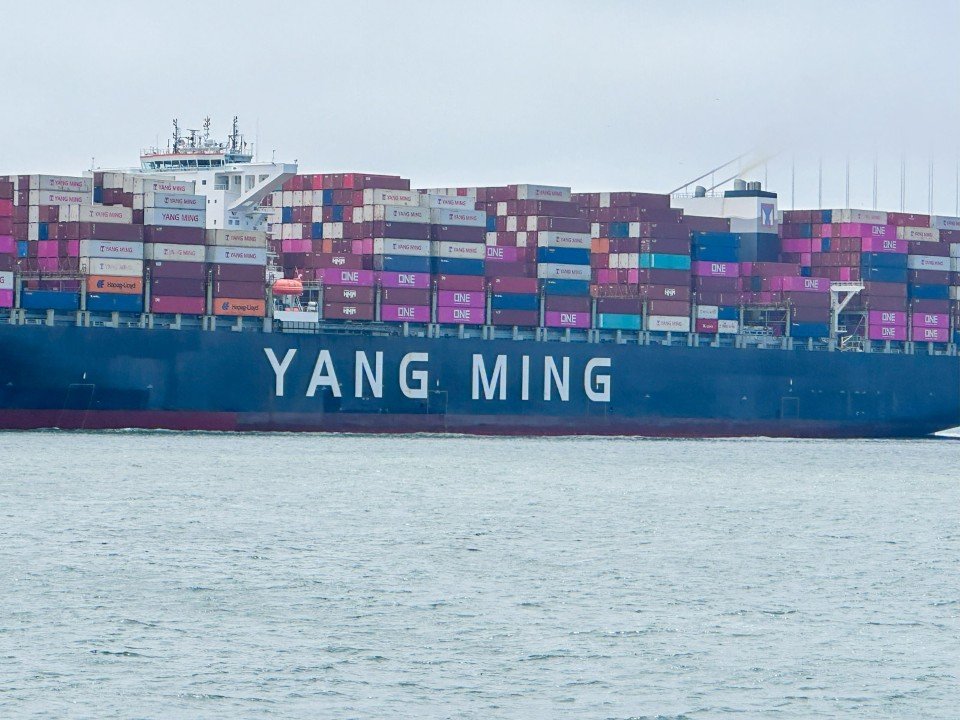
Selecting the correct unit for global freight requires an understanding of international standardisation. Most cargo moves in units built to ISO 668 standards, which specify the external dimensions and frame strength requirements. At Shipping Containers of Southampton, we supply a wide range of equipment designed for the rigours of sea transit. Whether you need to buy shipping containers for permanent inventory or seek flexible hire terms, our technical team provides the data required for successful logistics planning.
A lead logistics assessor with twenty years of industry experience oversees our operations. We maintain ISO 9001 certification, reflecting our commitment to quality management and operational safety. Every container we supply for international transport must carry a valid CSC plate. A CSC plate is a safety approval certificate proving the unit is structurally sound for stacking and freight. This certification is regulated by the International Maritime Organisation (IMO). Understanding these technical validations helps ensure your cargo stays secure from the Port of Southampton to its final destination.
The standard dry container is the most common tool in global trade. Constructed from Cor-Ten steel, these units are designed to be wind and watertight. Wind and watertight means the unit is fully sealed against the elements to keep contents dry. Cor-Ten is a weathering steel that forms a protective oxide layer, helping prevent deep-seated corrosion even in salt-heavy maritime environments. These units are ideal for general-purpose cargo that does not require temperature control.
The 20ft shipping container is the industry benchmark, often referred to as a twenty-foot equivalent unit (TEU). A TEU is a standard measurement based on a 20ft container. It is favoured for its versatility and smaller footprint. For higher volume requirements, the 40ft shipping container, or forty-foot equivalent unit (FEU), offers roughly double the capacity. An FEU is a standard measurement based on a 40ft container. This makes it more cost-effective for large industrial shipments.

For cargo that exceeds standard height limits, high cube containers provide an additional foot of vertical space. While a standard unit is 8ft 6 in tall, a high cube is 9ft 6 in. This extra headroom is essential for bulky items or for improving airflow in converted units. You can view the complete technical dimension library to verify whether your cargo meets these internal measurements before dispatch. Check the standard 40ft internal measurements to ensure your load fits within the door aperture.
Temperature-sensitive cargo, such as pharmaceuticals, food, and chemical products, requires the precise control offered by refrigerated units. A reefer is a refrigerated container fitted with a digital cooling plant to maintain a constant temperature. These units are equipped with an integrated cooling plant and high-density insulation. Reefer temperatures typically maintain internal environments between -25°C and +25°C, helping ensure the integrity of the cold chain throughout the journey.

A key technical feature of the reefer is the aluminium T-bar floor. This floor design facilitates air circulation beneath the cargo, preventing hot spots and helping to maintain a uniform temperature. For businesses in Hampshire, we offer 40ft reefer container hire options for seasonal stock surges or temporary cold storage. Before hiring, ensure your site has the required 3-phase power supply to operate the refrigeration plant. For agricultural projects, these units are excellent refrigerators for hydroponics and vertical farming.
Not all cargo fits within the four walls of a standard box. For “out-of-gauge” (OOG) freight, we supply specialised open-top and flat-rack containers. These units allow for the transport of heavy machinery, oversized boilers, and structural steel that requires crane loading from above or the side.
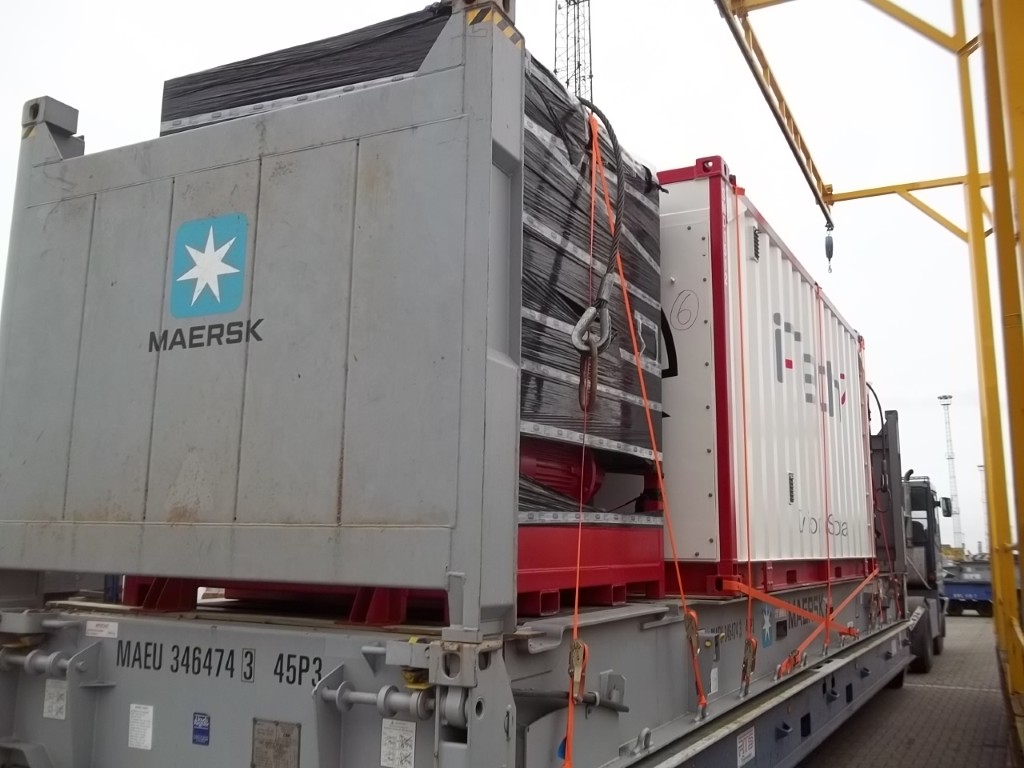
These units are vital for the engineering and construction sectors in Southampton. When using these types, you must account for the unit’s tare weight and payload. Tare is the weight of the empty container. Payload is the maximum weight of cargo the unit can safely carry. Knowing these figures is essential for planning the crane lift capacity at your site or port facility.
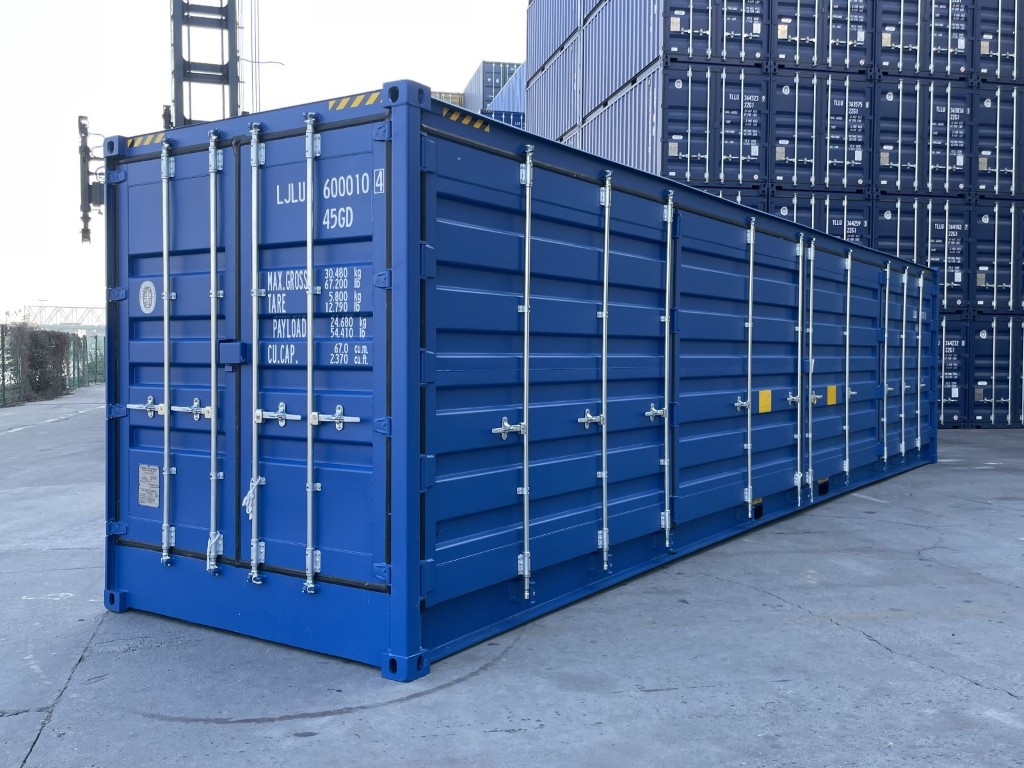
To improve loading efficiency, Shipping Containers of Southampton stocks specialist side-access units. These containers feature full-length side doors, allowing easy loading of long items such as timber or pipes that cannot be manoeuvred through standard end doors. They are also highly effective for use as temporary workshops or retail units where broad access is required.
Tunnel containers, or double-ended units, feature standard doors at both ends. This allows for “first-in, last-out” inventory management and provides a dual access point for long-term storage projects. If you are looking for the highest structural quality, we recommend single-trip shipping containers. A one-trip unit is a container manufactured in Asia that carries a single cargo load to the UK and is in near-new condition. These are the preferred choice when buying cargo-worthy containers for high-visibility commercial sites.
Transporting a container to a commercial site in Hampshire requires expert planning. Shipping Containers of Southampton uses a FORS Silver-accredited fleet for all deliveries. FORS is a voluntary accreditation that proves our commitment to road safety and operational efficiency. We use HIAB crane vehicles to lift and place the container with precision on your site. A HIAB is a truck fitted with a hydraulic crane arm for lifting and placing containers, which removes the need for separate on-site lifting gear.
To ensure a safe delivery, your site must have level, hard-standing ground. If the ground is uneven, the container may suffer from racking. Racking is the twisting of the container frame on uneven ground, which causes the doors to jam. We recommend a four-point foundation strategy using concrete pads or rail sleepers. For more data on site preparation, see our “Preparing Your Site Foundation” guide and check the container footprint measurements to ensure the vehicle has enough room to extend its stabiliser legs.
While shipping containers are generally classed as temporary structures, their placement must comply with local rules. Within the Southampton City Council Planning Portal jurisdiction, units that stay on-site for more than 28 days may require specific notice or permission. This is especially true if the unit is located in a conservation area or is used for a permanent business expansion.
We provide a dedicated resource on local council planning rules to help you navigate this process. Staying proactive ensures your storage solution remains hassle-free. Our technical team can also provide site surveys to evaluate delivery routes and check for overhead obstructions, such as live power cables. Before finalising your order, you should request a delivery assessment to minimise your risk and avoid delivery failure charges.
A one-trip unit is the highest grade available. It is manufactured in Asia and shipped to the UK as a single cargo load before being sold. These units offer an excellent cosmetic appearance and the longest lifespan. If you are looking for long-term value, consider single-trip shipping containers for your next Hampshire project.
Condensation occurs when the steel walls cool faster than the air inside. We recommend using anti-condensation coatings or moisture traps. Proper ventilation is also key to preventing “container rain.” View our guide on keeping your shipping container cool for more technical tips.
Yes. We require a site representative to confirm the exact placement and ensure the HIAB driver can operate safely. You should check for low-hanging trees or power lines before the vehicle arrives. For complex sites, speak to our Southampton experts about a site survey.
IICL refers to the Institute of International Container Lessors. An IICL-standard used container has undergone rigorous inspection and repair to meet the highest industry standards for structural integrity. This ensures the unit is suitable for long-term industrial use and that container refurbishment and repair standards are maintained.
The maximum payload for a standard 20ft unit is approximately 28,200 kg. However, you must also consider the unit’s tare weight. For detailed data, see our check 20ft payload and door width guide on the technical specifications page.
We provide the technical expertise and delivery precision that South Coast businesses require. Our team ensures that every unit meets high-quality standards, backed by ISO 9001 certification and managed by an expert logistics assessor. We use a FORS-accredited delivery fleet to ensure your container is placed safely and accurately, even in challenging urban environments. Whether you want to hire a container for Southampton businesses or buy a permanent unit, we offer reliable support and a wide range of stock. We also serve the wider region, including shipping containers for sale in Portsmouth and container hire options for Eastleigh.
At Shipping Containers of Southampton, we serve locations across the South of England. Our hiab delivery coverage includes Reading, Portsmouth, Swindon, Basingstoke, Guildford, Maidenhead, Camberley, Eastbourne, Eastleigh, Bracknell, Bournemouth, Brighton, Slough, Crawley, Farnborough, Weybridge, Aldershot, and Chichester. Whether you need a new or used container, we offer prompt delivery and competitive pricing.